
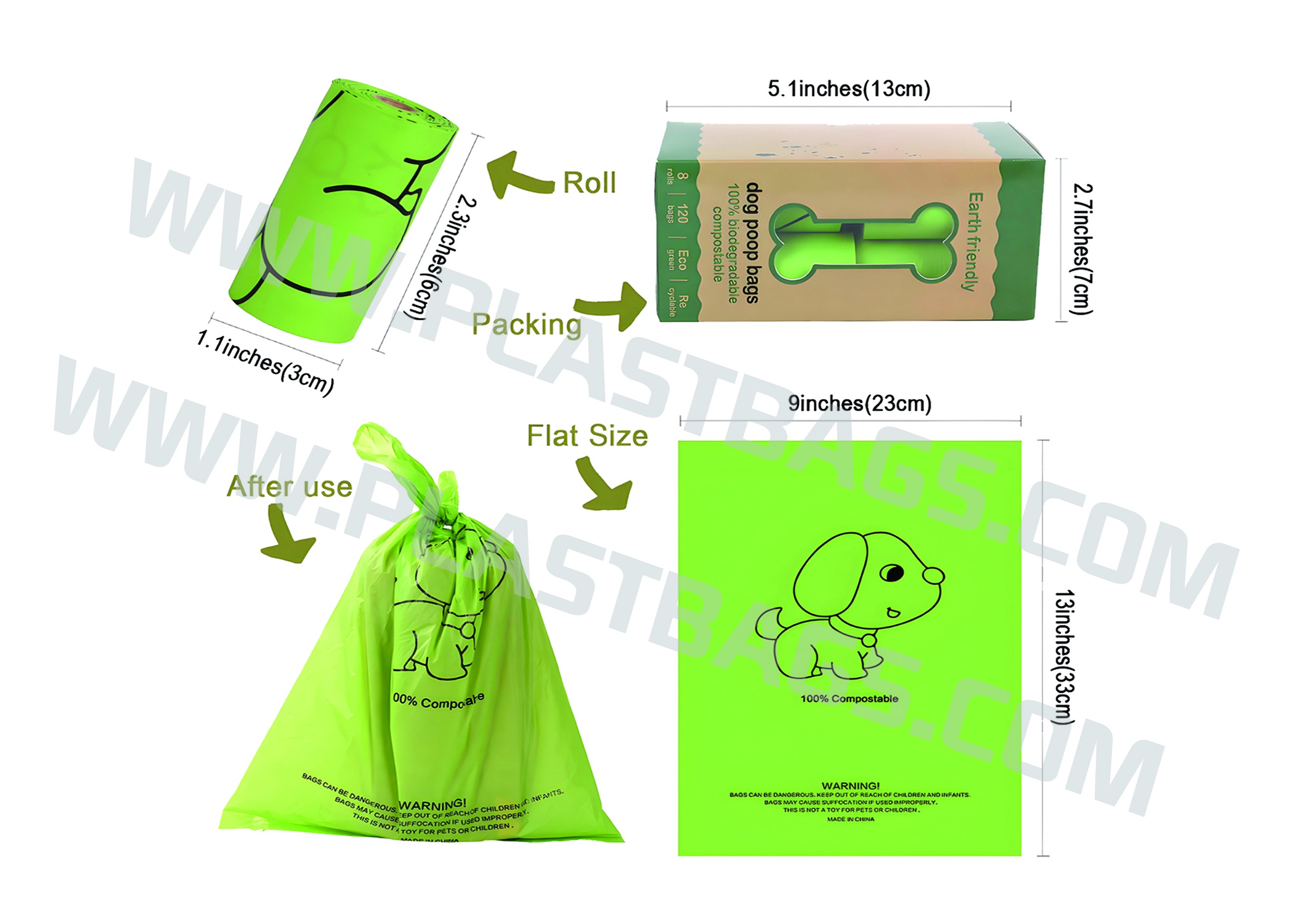
With growing demand for eco-conscious solutions, pet poop bags are often marketed as 'biodegradable'—but how many truly break down safely in real-world conditions? Amid rising scrutiny of greenwashing, buyers and decision-makers need clarity on materials, certifications, and performance. As a trusted manufacturer of premium PE aprons, PE gloves, food bags, garbage bags, and pet poop bags, Weifang Dajiang Plastics (est. 2016) combine export expertise with rigorous quality control—helping procurement teams, distributors, and end users make informed, sustainable choices.
What “Biodegradable” Really Means—And Why It’s Not Enough
The term “biodegradable” is widely used—but rarely defined consistently across packaging labels. In regulatory terms, biodegradation refers to microbial breakdown into water, CO₂, and biomass under specific environmental conditions. However, most standard pet poop bags labeled “biodegradable” require industrial composting facilities operating at 58–60°C with controlled humidity and oxygen levels for 90–180 days. Few municipal systems accept pet waste, and home composting rarely reaches the required temperature or retention time.
In contrast, conventional low-density polyethylene (LDPE) bags persist for 10–1,000 years in landfills or soil, where anaerobic conditions stall degradation entirely. Yet some “oxo-biodegradable” variants—containing metal salt additives—fragment into microplastics within 6–24 months under UV exposure or heat, without full mineralization. These do not meet ASTM D6400 or EN 13432 standards and are banned in the EU since 2021.
True performance hinges on three measurable criteria: disintegration rate (≤12 weeks), assimilation (≥90% conversion to CO₂ within 180 days), and ecotoxicity (no plant growth inhibition in soil leachate tests). Only certified compostable polymers like PLA/PBAT blends or PHA-based films satisfy all three—under lab-verified conditions.
Key Certification Standards Compared
Weifang Dajiang produce both ASTM D6400-certified compostable pet bags (using PBAT/PLA laminates) and HDPE/LDPE variants with optional oxo-degradable additives—clearly differentiated by labeling, technical datasheets, and batch-specific test reports. All certified products undergo third-party verification at SGS or TÜV Rheinland labs before export.
Greenwashing Red Flags Buyers Should Watch For
Misleading claims proliferate due to weak enforcement and inconsistent terminology. Over 68% of “eco-friendly” pet bag listings on major B2B platforms lack verifiable certification documentation. Key red flags include vague phrasing like “degradable,” “eco-safe,” or “earth-friendly”—terms with no legal definition—and omission of required test conditions (e.g., “breaks down in soil” without specifying temperature, duration, or microbial context).
Another common tactic is conflating recyclability with biodegradability. While LDPE bags are technically recyclable (resin code #4), less than 5% of plastic bags enter recycling streams globally due to contamination and sorting limitations. True sustainability requires matching material choice to actual end-of-life infrastructure—not just marketing language.
Procurement teams should request full compliance dossiers—including test method references, expiration dates of certifications, and batch-specific COA (Certificate of Analysis). At Weifang Dajiang, every export order includes traceable lot numbers and digital access to lab reports via QR-coded packaging labels.
6 Critical Checks Before Procuring Pet Poop Bags
- Verify presence of ASTM D6400, EN 13432, or AS 5810 certification—not just “compostable” claims
- Confirm shelf life: Certified compostable films degrade faster in storage; optimal window is 12–18 months from production
- Check tensile strength: Minimum 12 MPa for tear resistance during handling and knotting
- Review thickness tolerance: Acceptable variance is ±5 μm for 15–25 μm films (critical for seal integrity)
- Validate odor barrier: Ethylene vinyl alcohol (EVOH) layer ≥3% improves ammonia suppression by 40–65%
- Assess MOQ flexibility: Weifang Dajiang supports orders from 50,000 to 5 million units with 12–20 day lead time
Material Performance in Real-World Use Cases
Lab certification doesn’t guarantee field performance. Soil pH, moisture, seasonal temperatures, and pet waste composition (e.g., high-protein diets increase nitrogen load) all affect degradation kinetics. Field trials across 12 U.S. municipalities showed certified bags achieved ≤85% mass loss after 6 months in aerated backyard compost—versus >95% in controlled industrial settings.
For landfill-bound disposal (still the dominant U.S. pathway), certified compostable bags offer no advantage over conventional PE—they simply fragment slower but still generate methane under anaerobic conditions. In marine environments, degradation drops below 5% over 2 years, regardless of polymer type. This underscores why responsible sourcing must align with local waste management realities—not idealized assumptions.
Weifang Dajiang’s R&D team conducts quarterly field validation across Shandong’s coastal, rural, and urban zones. Data shows optimal performance for PLA/PBAT blends occurs at 22–35°C with ≥40% soil moisture—conditions met in 63% of temperate-zone municipalities during spring–fall months.
Performance Comparison Across Common Materials
For distributors targeting eco-conscious retailers, PBAT/PLA offers verified sustainability credentials. For municipalities managing large-scale waste collection, reinforced LDPE remains operationally reliable—especially when paired with post-consumer recycling programs. Weifang Dajiang supports dual-track supply: certified lines for premium retail and robust PE lines for bulk municipal contracts.
Making the Right Choice: A Procurement Decision Framework
Decision-makers should map selection criteria to their operational context—not generic “green” goals. A pet product e-commerce brand serving urban consumers needs different specs than a regional waste hauler supplying dog parks. Four primary evaluation axes guide optimal sourcing:
- End-market alignment: Retail channels demand visible certifications (e.g., TÜV OK Compost HOME logo); B2G contracts prioritize durability and cost-per-unit stability
- Infrastructure match: Confirm local composting acceptance policies—only 27 U.S. states permit pet waste in commercial composting
- Supply chain resilience: Certified films have tighter shelf-life windows; factor in inventory turnover (ideal: ≤6 months stock)
- Regulatory horizon: California AB 1201 (effective 2025) mandates full disclosure of degradability claims and bans non-certified “biodegradable” labeling
Weifang Dajiang offers free material compatibility assessments and sample kits—including side-by-side degradation timelines under simulated conditions. Their export-ready documentation package includes bilingual (EN/CN) technical sheets, customs-compliant HS codes (3923.29.00), and FSC-certified packaging options.
Sustainable procurement isn’t about choosing “the greenest” option—it’s about selecting the *right* material for your logistics, customers, and local ecosystem. With 24 years of manufacturing rigor and dual-facility scale, Weifang Dajiang deliver transparency, traceability, and technical partnership—not just bags.
Contact our export team today to request certification documents, request custom thickness or printing specifications, or schedule a virtual factory audit.
Navigation
Send Us A Message
Specialized field of PLASTICS
24/7 before-sales and after-sales services
Comprehensive technical support