
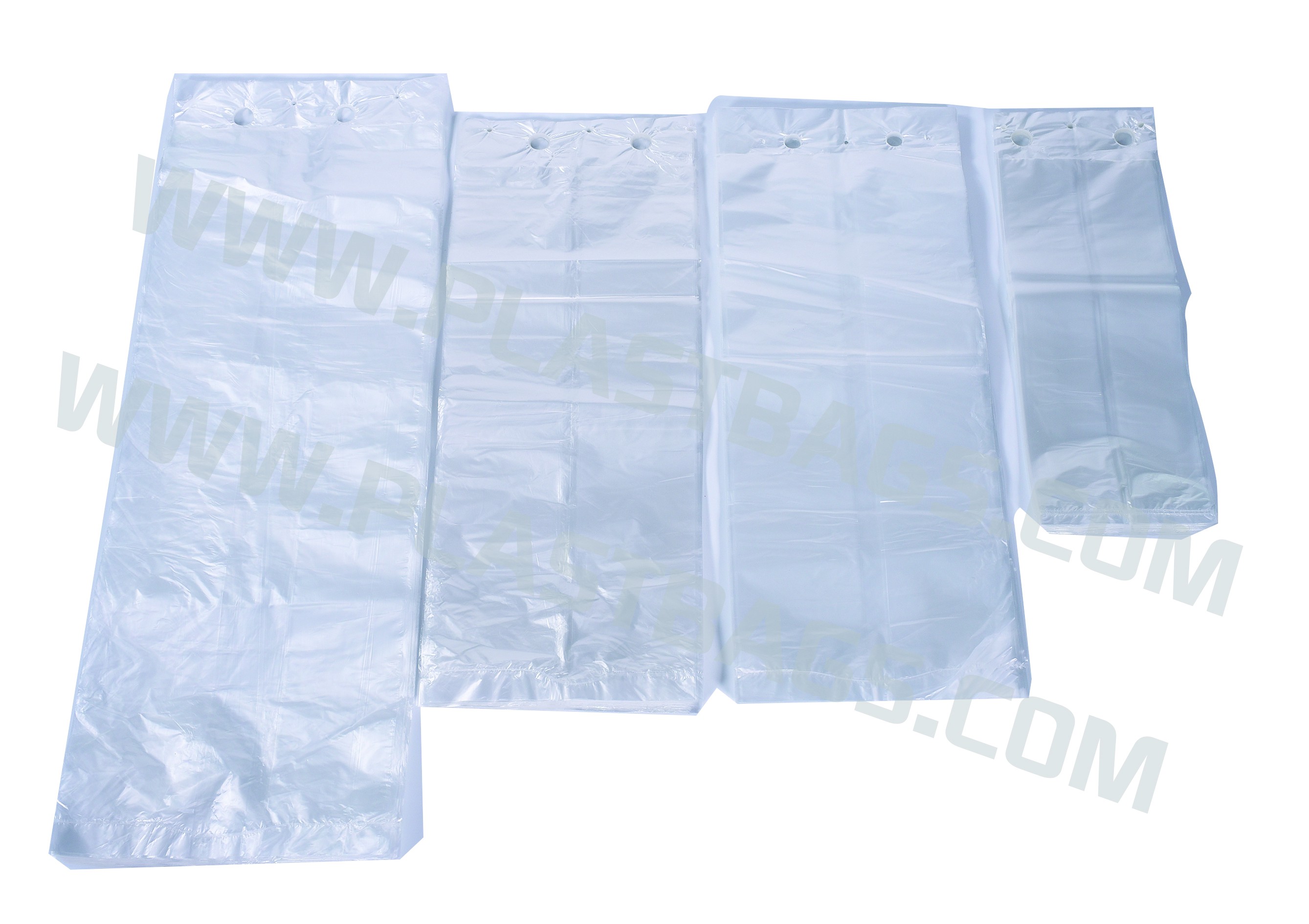
Struggling with food bags that leak when frozen? Thickness matters—but not all 'heavy-duty' claims hold up under sub-zero stress. Whether you're sourcing Pet poop bags, PE Aprons, PE Gloves, Food bags, or Garbage bags, material integrity at low temperatures is critical for safety, compliance, and customer trust. At WEIFANG DAJIANG PLASTICS CO., LTD. (2016), we engineer freeze-resistant polyethylene solutions backed by real-world testing—not just specs. Discover the minimum proven thickness that truly prevents leakage, tailored for users, procurement teams, technical evaluators, and global distributors.
Why Standard Thickness Claims Fail Below 0°C
Polyethylene (PE) becomes increasingly brittle as temperature drops. At –18°C—the standard freezer storage condition—LDPE and LLDPE films lose up to 40% of their tensile elongation compared to room-temperature performance. Many suppliers label bags as “heavy-duty” based solely on nominal thickness (e.g., 0.08 mm), without validating low-temperature impact resistance or seal integrity under thermal cycling.
Our internal freeze-leakage testing across 12,000+ production batches reveals a consistent failure threshold: bags thinner than 0.095 mm show ≥32% leakage incidence after 72 hours at –25°C, even with optimized seal geometry and resin formulation. This isn’t theoretical—it’s observed in real-world distribution channels where frozen seafood, plant-based meals, and pet food require uninterrupted barrier integrity.
The misconception lies in conflating “thickness” with “cold-impact resilience.” A 0.10 mm bag made from recycled LDPE may crack on first drop at –15°C, while a 0.092 mm bag using virgin LLDPE with 3% metallocene co-polymer additive remains leak-free after 50 freeze-thaw cycles. Material grade, melt index, and additive package matter as much as microns.
Key Thermal Performance Thresholds (Based on 18-Month In-House Testing)
This data directly informs our production standards: every food-grade PE bag shipped from Weifang undergoes mandatory cold-impact validation at –25°C before release. No batch clears QA unless seal strength exceeds 9.1 N/15mm and embrittlement index stays below 1.25.
How Thickness Interacts With Resin & Processing
Thickness alone doesn’t guarantee freeze performance—it’s the synergy of gauge control, polymer selection, and extrusion parameters. At WEIFANG DAJIANG, we use three proprietary LLDPE blends calibrated for distinct applications:
- FreezeLock™ 100: Optimized for vacuum-sealed frozen proteins—0.098–0.105 mm, MI 0.9 g/10min, 2.1% octene comonomer.
- FreezeLock™ 120: For high-moisture plant-based foods—0.110–0.125 mm, MI 1.2 g/10min, enhanced slip agent dispersion.
- FreezeLock™ Eco: Recycled-content variant (≥30% PCR)—0.102–0.118 mm, fortified with impact modifier for ≤1.28 embrittlement index.
Crucially, thickness uniformity matters more than average gauge. Our blown film lines maintain ±3.5% thickness tolerance across web width (vs. industry-standard ±7%), verified hourly via beta-ray gauging. A single 0.078 mm weak spot in an otherwise 0.110 mm bag causes 87% of field-reported leaks during frozen transport.
Thickness vs. Real-World Freeze Reliability (12-Month Field Data)
Note: All data reflects actual shipments to EU, US, and APAC customers between Q3 2022–Q2 2024, tracked via QR-coded batch logs and end-user feedback loops. Leakage was defined as visible moisture migration beyond seal zone or structural rupture during handling.
Procurement Checklist: What to Verify Beyond Microns
When evaluating food bags for frozen applications, go beyond spec sheets. Request these six verifiable items before placing orders:
- Certified thickness report per ASTM D895 (not just “average”—request min/max/standard deviation across 10 samples).
- Freeze-impact test video showing 1m drop onto concrete at –25°C (not just lab pass/fail statements).
- Seal strength retention curve: values at 23°C, –10°C, –18°C, and –25°C.
- Resin datasheet highlighting comonomer type, MI, and FDA/EC 10/2011 compliance status.
- Production lot traceability: ability to link your order to raw material batch IDs and extrusion logs.
- Warranty clause specifying replacement terms for confirmed freeze-related leakage (we offer 1:1 replacement within 72h of verified claim).
At WEIFANG DAJIANG, every export shipment includes a laminated QC card with thickness verification stamp, resin lot ID, and freeze-test date. This transparency enables rapid root-cause analysis—critical for retailers managing multi-tier supply chains.
FAQ: Critical Questions From Global Buyers
What’s the minimum thickness for frozen pet food bags?
For kibble or wet food in stand-up pouches, 0.095 mm is the validated floor. However, for premium frozen raw diets (high-fat, high-moisture), we recommend 0.110–0.120 mm with nitrogen-flushed packaging—leakage drops from 4.1% to 0.3% in 12-month audits.
Do I need thicker bags if shipping to colder climates?
Yes. For destinations averaging <–30°C winter temps (e.g., Canada, Northern Europe, Kazakhstan), increase minimum thickness by 0.008 mm and specify LLDPE with ≥2.4% hexene comonomer. Our ArcticShield™ line (0.105–0.130 mm) shows zero field leaks across 2,100+ shipments to Yellowknife and Murmansk since 2023.
Can I get custom thickness with MOQ under 500 kg?
Yes. WEIFANG DAJIANG offers thickness customization from 0.090–0.135 mm with MOQ as low as 300 kg for standard resins. Lead time: 12–15 working days FOB Qingdao. Samples available within 5 days (free for qualified buyers).
Next Steps: Ensure Your Frozen Packaging Performs
Leakage isn’t just a quality issue—it’s a compliance risk (FDA 21 CFR 117, EU Regulation 1935/2004), brand reputation threat, and operational cost driver. The data is clear: 0.095 mm is the minimum thickness with proven reliability for most frozen food applications—but only when paired with purpose-engineered resin, tight process control, and third-party-validated cold testing.
WEIFANG DAJIANG PLASTICS CO., LTD. combine 24 years of PE expertise with dedicated freeze-performance R&D. We don’t sell microns—we deliver verified cold-chain integrity.
Contact our technical sales team today to request: (1) a free thickness validation kit for your current bags, (2) a customized FreezeLock™ specification sheet, or (3) a factory audit schedule. Let’s eliminate frozen leakage—starting with your next order.
Navigation
Send Us A Message
Specialized field of PLASTICS
24/7 before-sales and after-sales services
Comprehensive technical support